
Guangzhou Panyu: construction workers demanding unpaid wages expelled by police, who told them “unpaid wages are illegal — you can sue him”
At the Hengji Xueyuan No. 1 housing development in Panyu District, Guangzhou, Guangdong, construction workers were owed unpaid wages; on November 25, 2026, some of them went into the residential compound to demand payment and clashed with property management staff, with both sides falling to the ground. Police who arrived at the scene said the workers' entry into the compound to demand wages was illegal and ordered them to leave; when the workers asked whether withholding wages was illegal, the officers replied, “Unpaid wages are illegal — you can sue him.” The amount owed, the number of workers, whether anyone was injured in the clash, and any follow-up on the unpaid wages have not been reported. This record is published as under ongoing verification. [1][2]
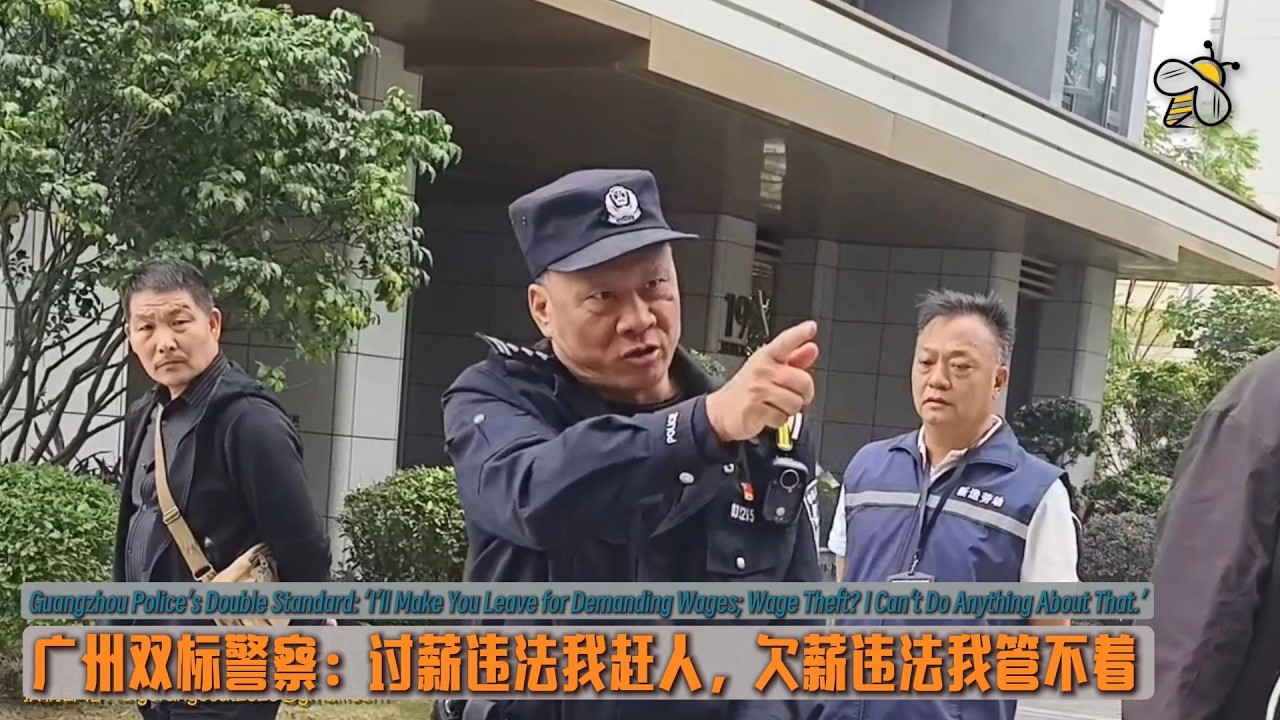
▶ Watch the on-scene video (YouTube): the wage protest and the police expulsion
Why it matters
This record is worth publishing for two reasons. First, it is a typical case of wage claimants meeting unequal treatment from law enforcement: after their wages were withheld, workers who came to demand payment were told by the police on the scene that demanding wages was illegal and were ordered to leave, while the wage arrears themselves were left unaddressed — a contrast captured directly in the exchange at the scene, in which the officers said unpaid wages were illegal and the workers could sue. Second, the incident is supported by on-site video: both the clash and the officers' words appear in footage filmed on November 25, and NTD also reported the incident in its November 26 rights briefing, so the factual chain has visual backing and meets this site's standard for publication from a single source with supporting evidence. To be clear: the amount owed, the number of workers, whether anyone was injured in the clash, whether the workers or the property staff faced any consequences, and whether the arrears were ever paid have not been reported; this record states only what has been disclosed and draws no inferences. [1][2]
Full report
Event card: Time — November 25, 2026; Place — Hengji Xueyuan No. 1 housing development, Panyu District, Guangzhou, Guangdong, China; Type — labour rights; Status — ongoing (no reporting on whether the arrears were resolved); People involved — construction workers at the development (number not disclosed); Account — the development owed its construction workers unpaid wages; on November 25, some workers went into the residential compound to demand payment and clashed with a property management worker, with both falling to the ground; Official response — police who arrived at the scene said the workers' entry into the compound to demand wages was illegal and ordered them to leave; when the workers asked whether withholding wages was illegal, the officers replied, “Unpaid wages are illegal — you can sue him,” and no police action on the wage arrears themselves has been reported; Sources — NTD rights briefing, November 26, 2026 [1]; on-site video (YouTube, November 25, 2026) [2].
What happened at the scene: according to NTD's November 26, 2026 rights briefing, the Hengji Xueyuan No. 1 development in Panyu District, Guangzhou, Guangdong, owed its construction workers unpaid wages; on November 25, some workers went into the compound to demand payment, and one worker clashed with a property management worker, with both falling to the ground. Police who arrived at the scene said the workers' entry into the compound to demand wages was illegal and ordered them to leave. On-site video records the exchange between the workers and the police: the workers asked whether withholding wages was illegal, and an officer replied, “Unpaid wages are illegal — you can sue him.” The video is titled (in Chinese) “Guangzhou's double-standard police: demanding wages is illegal so I expel you, withholding wages is illegal but not my problem.” [1][2]
Verification note: this record verifies the following facts corroborated by reporting and video — the date (November 25, 2026) and place (Hengji Xueyuan No. 1, Panyu District); that workers went into the compound to demand unpaid wages and clashed with property staff; and that police ordered the wage claimants to leave and made the reply quoted above. The parts not verified — the amount owed and the number of workers involved; whether anyone was injured in the clash; whether the workers or the property staff faced any consequences; and whether the arrears were ever paid. As of publication, no public response from the developer, the property management company or the police on the wage arrears or the expulsion has been seen. This record is published as under ongoing verification; this site will continue to follow how the wage arrears are handled. [1][2]
Primary sources
- NTD (San Francisco), November 26, 2026 rights briefing: “Guangzhou development owes wages; workers demanding pay expelled by police” — the Hengji Xueyuan No. 1 development in Panyu District, Guangzhou, Guangdong, owed construction workers unpaid wages; on November 25, some workers went into the compound to demand payment, and one worker clashed with a property management worker, with both falling to the ground; police who arrived said the workers' entry into the compound to demand wages was illegal and ordered them to leave. This site has checked the full text of the report.
- On-site video (YouTube), November 25, 2026: “Guangzhou double-standard police: demanding wages is illegal so I expel you, withholding wages is illegal but not my problem (2026.11.25)” — records the workers blocking the entrance to demand unpaid wages, the clash with property staff in which both fell, and the on-site exchange in which police said demanding wages was illegal and ordered the workers to leave, and, when asked whether withholding wages was illegal, replied, “Unpaid wages are illegal — you can sue him.” This site has checked the video's title and summary.
The links above point to the original publishers of the cited reports or articles. Their conclusions are attributed in the text and do not amount to independent verification of every fact by this site.